

Updated
In this article (12 sections)
Most local business owners know they “need a better website,” but they rarely get a clear answer to a simple question:
What exactly do I get when I pay for a full-service website development project—and how does it actually turn into more leads?
If you have ever:
- Paid for a “nice-looking” site that did not move the needle on calls or form fills
- Been stuck between a cheap freelancer, a DIY builder, and a big agency you are not sure you can trust
- Felt confused by terms like Next.js, WordPress, performance, and SEO
…this article is written for you.
In this guide, we will break down full-service website development in plain language, from the first strategy conversation to the moment your site is live, fast, and ranking in Google. We will also show how a full-service approach differs from low-cost or piecemeal options—and why it matters if you are a local business in places like California, Washington DC, Los Angeles, or Costa Mesa that wants more leads, not just more pages.
What Is Full-Service Website Development?
Full-service website development means you are not just paying for “pages” or a “theme.” You are paying for a complete system that takes your business from “we need a better site” to “our website consistently brings in leads.”
At a minimum, a full-service project should include:
- Strategy and planning based on your business goals and local market
- UX and UI design that focuses on conversions, not just looks
- Modern front-end and back-end development
- On-page SEO and basic local SEO foundations
- Performance optimization (site speed, Core Web Vitals)
- Launch, tracking setup, and post-launch support
A good way to think about it is this:
Full-service = one partner responsible for the entire journey from idea → live site → measurable results.
Anything less than that leaves gaps. Those gaps are where leads are lost.
Why Local Businesses Struggle With Websites (and Why Full-Service Helps)
Many local businesses in cities like Los Angeles, Costa Mesa, and Washington DC run into the same problems with their websites. The issues are rarely about color schemes or fonts—they are about missing pieces in the system.
Common patterns look like this:
- A friend or cheap freelancer builds a site, but there is no SEO or performance work
- A DIY builder site looks okay on desktop but fails on mobile where most visitors actually are
- An agency redesigns the site but never connects it to tracking, Google Search Console, or a lead strategy
A full-service approach is designed to fix those issues by connecting all the pieces, so your website is not just pretty—it is a predictable part of your lead generation.
What’s Included in Full-Service Website Development (Step by Step)
To make this real, let us walk through what a full-service project typically includes when done properly for a local business.
1. Discovery & Strategy: Understanding Your Business and Market
Full-service development starts with understanding your business model, local market, and lead goals—not picking a template.
In this stage, a good team will:
- Ask about your best customers and where they are located
- Clarify what a “lead” means for you (calls, forms, bookings, visits)
- Review your current website, analytics (if any), and local competition
- Ask which locations you care about most (e.g., Costa Mesa vs. wider California vs. Washington DC)
The output should be a simple but clear strategy that connects:
- Who you want to reach
- What you want them to do
- How your website will guide them there
Without this, design and development are guesses.
2. Information Architecture: Structuring the Site for Humans and Google
Once your goals are clear, the next step is information architecture—planning what pages you need and how they are organized.
For a local business, a full-service approach usually includes:
- A clear homepage focused on your primary offer and local markets
- Dedicated service pages (one per main service, not everything on one page)
- Location-specific pages if you serve multiple cities (e.g., “Web Development in Los Angeles”, “SEO Services in Costa Mesa”)
- About, Contact, and FAQ pages built to answer trust questions
- Blog or resources section for SEO and education
The structure helps both:
- Visitors: find what they need fast
- Search engines: understand what you do and where you operate
3. UX & UI Design: Turning Visitors into Leads
Design is not just about visual polish; it is about guiding visitors toward action.
A full-service project should include UX and UI design that focuses on:
- Clear headlines that say what you do and where you do it
- Obvious calls to action (call, book, request quote) above the fold
- Trust elements like testimonials, reviews, logos, and guarantees
- Simple navigation that works on desktop and mobile
- Forms that are short, clear, and easy to understand
For local businesses, good design is what makes the difference between a visitor thinking:
“Nice website, maybe I will come back later…”
and:
“This is exactly what I need. I am calling them now.”
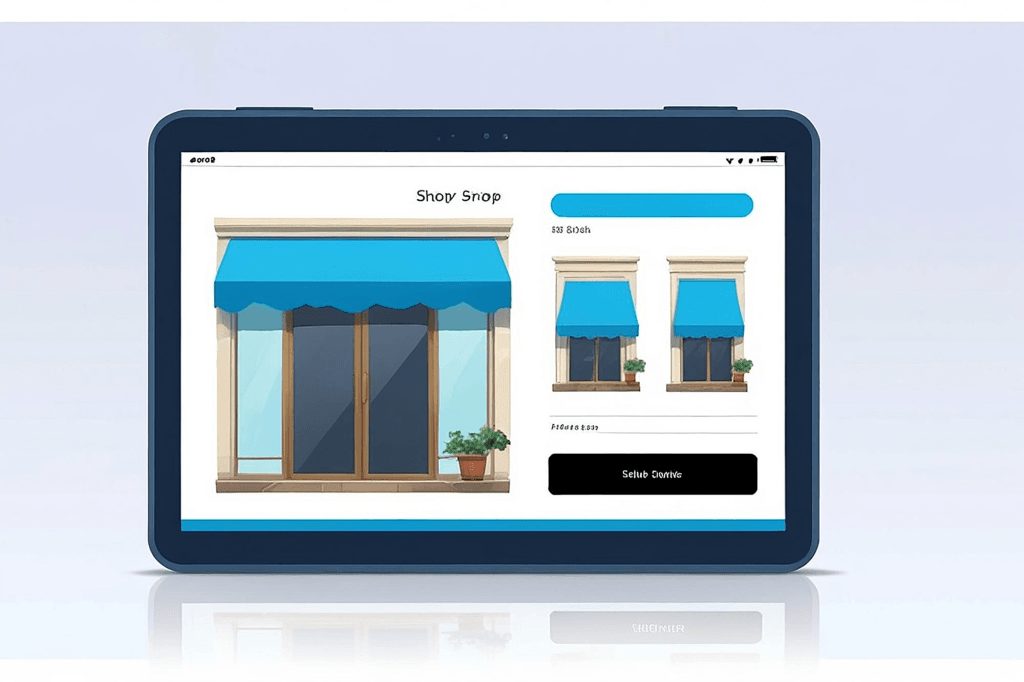
- Screenshot or mockup of a clean local business homepage (hero area with a strong CTA).
- Alt text: “High-converting local business homepage design with clear call to action.”
4. Development: Building on the Right Technology (Next.js vs WordPress, Custom vs Templates)
Once the design is approved, development brings it to life. This is where technology choices matter.
A full-service partner should explain tradeoffs clearly, not just throw buzzwords at you.
Key decisions:
- WordPress
- Pros: Widely used, flexible, many plugins, quick to launch for simpler sites
- Cons: Can be slow or bloated if poorly built; plugin conflicts; more maintenance
- Next.js / Modern frameworks
- Pros: Very fast when built well, great for performance and SEO, flexible for custom applications
- Cons: Requires more technical skill, not every freelancer can support it, sometimes higher upfront cost
For many local service sites, a well-built WordPress site can be enough. For more complex needs (custom dashboards, apps, web tools, very performance-sensitive sites), Next.js or similar can be a better choice.
A full-service team should choose the stack that fits your goals, not the one they feel like using.
5. On-Page SEO and Local SEO Foundations
Full-service website development is not complete without SEO and local SEO basics baked in.
That should include:
- Keyword research around your services and locations
- On-page optimization for each core page:
- Title tags, meta descriptions, headings (H1, H2, H3)
- Clean, descriptive URLs
- Internal links between related pages
- Local SEO foundations:
- Clear NAP (Name, Address, Phone) information
- Location-specific content where relevant
- Integration with your Google Business Profile
You do not need thousands of blog posts on day one, but you do need a site that is structured so Google can understand and rank it.
6. Performance Optimization: Speed, Core Web Vitals, and Mobile
Website performance used to be “nice to have.” Today, it directly affects:
- How many visitors stay on your site
- How many leads you get
- How Google ranks you
A full-service project should include:
- Image optimization (right sizes, next-gen formats)
- Caching and content delivery network (CDN) setup where appropriate
- Clean, lightweight code and minimal unnecessary scripts
- Testing and improving Core Web Vitals (Largest Contentful Paint, Cumulative Layout Shift, etc.)
For a local business, this often means the difference between:
- A slow site where people bounce before they see your offer
- A fast site that loads in under 2–3 seconds and keeps visitors engaged
Before performance improvement of website:

After performance improvement of website:

After performance improvement of website:
- Before-and-after chart showing page load time improvements.
- lt text: “Website performance improvement chart after full-service development and optimization.”
7. Analytics, Tracking, and Conversion Setup
If your website goes live without tracking, you are flying blind.
Full-service development should always include:
- Google Analytics 4 setup
- Google Search Console connection
- Basic event tracking for:
- Phone number clicks
- Form submissions
- Key button clicks (e.g., “Book a Call,” “Get a Quote”)
- Clear goals defined (e.g., “lead = form submission or call”)
This allows you to answer simple but critical questions:
- “How many leads is my website actually generating each month?”
- “Which pages bring in the best leads?”
- “Is my traffic from Los Angeles or Costa Mesa doing better than other locations?”
Full-Service vs. DIY vs. “Just a Developer”: A Comparison Table
To put things in perspective, here is a simplified comparison:
| Aspect | DIY Builder (Wix/Squarespace) | “Just a Developer” (No Strategy/SEO) | Full-Service Website Development (Strategy + Dev + SEO + Performance) |
|---|---|---|---|
| Strategy & Planning | You guess page structure and content yourself | Basic pages, often based on your instructions | Clear structure based on goals, services, locations, and lead targets |
| Design for Conversions | Templates not tailored to your business | May look good, not always conversion-focused | UX and UI built specifically to turn visitors into calls and leads |
| Development Quality | Limited flexibility, can be slow if overloaded with apps | Varies widely; often no performance focus | Modern stack (WordPress or Next.js) built for speed and stability |
| On-Page SEO | Very basic; you handle SEO fields yourself | Basic or none, unless explicitly requested | Keyword research, clean URLs, titles, headings, internal links, local relevance |
| Local SEO Foundations | Minimal; you set it up manually | Rarely included | Location pages, local signals, NAP clarity, Google Business Profile integration |
| Performance Optimization | Limited control over deeper performance | Often ignored or minimal | Image compression, caching, clean code, Core Web Vitals improvements |
| Tracking & Analytics | Basic pageview tracking if you add it | Sometimes GA is added, nothing more | Full tracking of calls, forms, key clicks, plus reporting potential |
| Ongoing Improvement | You do it all yourself | Usually ends at launch | Set up for content, SEO, and performance improvements over time |
| Time & Stress for Owner | High: you manage everything | Medium: you still handle strategy, content, and SEO decisions | Low: one partner accountable for the entire process from plan to lead generation |
| Typical Outcome | “We have a website.” | “We have a nicer website, but results are unclear.” | “We have a website that is part of a system bringing in calls and leads.” |
How Full-Service Development Helps Local Businesses in Places Like California, Washington DC, Los Angeles, and Costa Mesa
Local markets are competitive. In many cities, your competitors:
- Already invest heavily in Google ads
- Have been online for years
- Have more reviews and brand recognition
A full-service website project is about closing that gap faster by making sure you are not just present online—you are compelling.
For a business in California, Los Angeles, Costa Mesa, or Washington DC, this can mean:
- Clear, location-specific pages that speak directly to that area
- Performance-optimized pages that load quickly on mobile devices
- Local SEO signals that help you show up when people search “[service] near me”
- A design and message that makes you feel like the obvious choice in your category
When Should You Consider Full-Service Website Development?
Full-service is not always the answer. It makes the most sense when:
- Your current website is not generating enough leads or calls
- You are serious about growing in one or more locations (e.g., LA + Costa Mesa)
- You want one accountable partner instead of juggling multiple freelancers
- You are ready to invest once in doing it properly, then build from there
It may be overkill if:
- You are just testing a tiny side project with no clear goal
- You are not yet ready to handle more leads operationally
- You have no budget at all and absolutely must DIY for now
But if you are at a point where your website is holding you back, full-service development is often the most direct way to make it a real asset.
What Working With a Full-Service Partner Typically Looks Like
While every agency has its own process, a straightforward full-service project usually follows this flow:
- Discovery call and proposal — align on goals, scope, and timeline
- Strategy & sitemap — define structure and content priorities
- Wireframes & design — create layouts focused on conversion
- Development — build the site on a suitable stack (WordPress or Next.js)
- SEO & performance pass — on-page SEO, local foundations, speed optimization
- Content and media integration — add copy, images, and video where needed
- Tracking setup & QA — configure analytics, test forms, and fix issues
- Launch & handover — go live, monitor, and adjust based on real data
You are not expected to “know everything.” A full-service team should explain decisions in clear language, show you progress, and connect each step back to your lead goals.
FAQ: Full-Service Website Development for Local Businesses
Q1: How long does a full-service website development project usually take?
For a typical local business site with a clear scope (e.g., 5–15 pages, basic blogs, and local SEO foundations), a realistic timeline is 6–10 weeks from discovery to launch. More complex projects with custom features, integrations, or multiple locations can take longer, but the key is to have a clear roadmap and milestones from day one.
Q2: Is full-service website development more expensive than hiring just a developer or using a DIY builder?
Upfront, yes—full-service is usually more expensive than a DIY setup or hiring a single low-cost developer. However, you are not just paying for pages; you are paying for a system that includes strategy, design, SEO, performance, and tracking. Over time, this typically returns more value through higher lead volume and better quality leads.
Q3: Do I need full-service if I already have a WordPress site?
Not necessarily. If your current WordPress site is structurally sound, you may just need performance, SEO, and conversion optimization rather than a full rebuild. However, if the site is very outdated, hard to manage, or has been patched together with many conflicting plugins, a full-service rebuild can be the more efficient and sustainable option.
Q4: How does full-service development support local SEO?
Full-service development supports local SEO by:
- Creating clear service and location pages
- Ensuring your NAP (Name, Address, Phone) is consistent and visible
- Structuring your content so Google understands what you do and where
- Integrating with your Google Business Profile and other local signals
While you may still need ongoing SEO work, a full-service project gives you a strong foundation to build from.
Q5: Can full-service website development help with mobile performance and Core Web Vitals?
Yes. Performance optimization is a key part of full-service work. This includes improving load times, optimizing images, reducing layout shifts, and making sure the site performs well on mobile devices. These improvements not only help your visitors but also support better rankings in Google.
Ready to Turn Your Website into a Lead Machine?
If you are a local business owner in California, Washington DC, Los Angeles, Costa Mesa, or anywhere in the US, and you feel like your website is not pulling its weight, it may be time to think beyond “I just need a new site.”
You may need a full-service website development partner who can handle:
- Strategy, structure, and design
- Modern, fast development
- On-page and local SEO foundations
- Performance and tracking that tie back to real leads
At rankmehi.com, we specialize in web development, web performance, and local SEO that work together to grow your business—not just your page count.
Book a Free Website & SEO Audit
If you want to see what a full-service upgrade could look like for your business, we offer a free website & SEO audit:
- A quick review of your current site’s structure, design, and performance
- A simple breakdown of what is helping and what is hurting your lead generation
- Clear, non-technical recommendations you can act on—whether you work with us or not
[Book your free website & SEO audit now] (link to your booking or contact page)
Let your website stop being a nice brochure and start becoming what it should be:
a reliable, measurable source of new leads.
Services mentioned in this article
RankMeHi designs and builds business websites, then makes sure they are found and convert. Start with the two pages below.
Keep reading

How Much Does It Cost to Build a Website? Real 2026 Prices, Line by Line
How much does it cost to build a website in 2026? Real price ranges for DIY, freelancer and agency builds, monthly costs, and the hidden costs to plan for.
Read article
Website Maintenance Services: What's Included, What It Costs, and What Happens If You Skip It
What do website maintenance services include, and what should they cost? See 2026 prices, a monthly checklist, and how to choose a plan that protects leads.
Read article
Why Custom Web Development in Next.js Beats Generic Templates for Local Businesses
If you’re a local business owner, you’ve probably heard some version of this: “Just grab a template, throw up a WordPress site, and you’re good to go.” You do that.You pay someone (or spend evenings yourself), you launch the site… and nothing really changes. The problem usually isn’t that you “don’t have a website.”The problem …
Read article
Website Programming for Local Businesses: How to Build a Site That Actually Gets Leads
Local business owners hear terms like “website programming”, “Next.js”, and “WordPress” all the time. But here’s the problem: You don’t care about buzzwords.You care about calls, bookings, and leads. If your website looks “fine” but isn’t bringing in new customers consistently, it’s usually not a design problem. It’s a website programming problem: In this guide, …
Read article