
In this article (14 sections)
Quick answer: RankMeHi ran Google Lighthouse accessibility tests on 476 live Orange County local business websites. In our study, the median score was 89 of 100, only 8.2% scored a clean 100, and 64.7% failed text contrast. Sites with an accessibility overlay widget scored a median 89, the same as the 89 of sites without one. Most fixes are small edits to colors, alt text and labels, not a rebuild.
A customer who uses a screen reader lands on your site to book a cleaning. The page reads "image, image, link, button." They can't tell which button books the appointment, so they leave and call the next office. Nobody tells you it happened.
That gap is what ADA website compliance is about, and it's also why demand letters keep arriving at small businesses under the Americans with Disabilities Act. RankMeHi is a web design and local SEO company in Costa Mesa, California, and we wanted numbers, not fear. So we tested the sites from our 662-business Orange County website study with the same accessibility test Google ships in Chrome (Lighthouse), and checked it against the Department of Justice's guidance.
Want to know your own score? We run this exact test, plus speed, forms and tap-to-call, and send you a short fix list, even if you never hire us. Get a free website check
How we tested 476 local business websites
Short answer: we ran Lighthouse 13.6.0 in mobile mode through Google's PageSpeed Insights API (Google's free page-testing service) on 19 November 2026, on every live site from our Orange County study, and counted the failed checks.
The sample comes from OpenStreetMap listings of local businesses in Orange County, California, with chains removed. Our September crawl found 486 live sites. 476 of them returned a Lighthouse accessibility score; the rest timed out or blocked the test, and we left them out rather than guess.
Here is what an automated test can and can't see:
- It can see missing alt text, low-contrast text, buttons and links with no name, form fields with no label, a missing page language, and zoom that is turned off.
- It can't see whether your alt text makes sense, whether a keyboard user can finish your booking form, or whether a screen reader user can follow your menu.
So treat these numbers as a floor. A site that fails here has a real barrier. A site that passes still needs a person to check it. This is research, not legal advice.
What ADA website compliance means for a private business
Short answer: the ADA has no written web standard for private businesses, so courts and the Department of Justice point to the Web Content Accessibility Guidelines (WCAG), level AA, as the yardstick.
A local business open to the public falls under Title III of the Americans with Disabilities Act. The Department of Justice's web guidance for businesses says websites must be accessible and points to WCAG as helpful guidance. The rule DOJ wrote in 2024 that names WCAG 2.1 AA applies to state and local governments under Title II, not to your shop. On 20 April 2026, an interim final rule moved its first deadline to 26 April 2027.
For you, that means three things:
- No certificate exists. Nobody can sell you an "ADA compliant" badge that a court has to accept.
- WCAG 2.1 or 2.2 AA is the test a plaintiff's expert will run, so it's the one to meet.
- Lawsuits don't wait for a rule. Seyfarth Shaw counted 3,117 federal website accessibility lawsuits in 2025, up 27% from 2024, and that count leaves out state courts.
What we found: ADA website compliance scores at a glance
Short answer: a typical local site in our sample scores in the high 80s, which looks fine and still fails 3 checks that real people trip over.
| Result | Sites | Share of 476 |
|---|---|---|
| Median Lighthouse accessibility score | 89 | |
| Scored a clean 100 | 39 | 8.2% |
| Scored 90 or more | 49.4% | |
| Scored under 80 | 12.8% | |
| Scored under 70 | 4.8% | |
| Median failed checks per site | 3 |
Source: RankMeHi accessibility test, Lighthouse 13.6.0, mobile, 19 November 2026.
A score of 89 sounds like a B+. It isn't a grade. Lighthouse weights each check, so a site can lose a few points for text a low-vision customer can't read at all. The score tells you that something is wrong, not how much it hurts.
For comparison, the WebAIM Million 2025 found detectable WCAG failures on 94.8% of the top one million home pages. Local business sites are not worse than the big web. They're just as broken, with less money to fix it.
Check yours in five minutes: open your home page in Chrome, press F12, open the Lighthouse tab, tick only Accessibility, pick Mobile and run it. Write down the score and the red items.
The 10 most common failures on local business websites
Short answer: contrast, headings, link names and missing alt text lead the list, and every one of them is an edit, not a redesign.
| Problem Lighthouse found | WCAG criterion | Sites failing | Share |
|---|---|---|---|
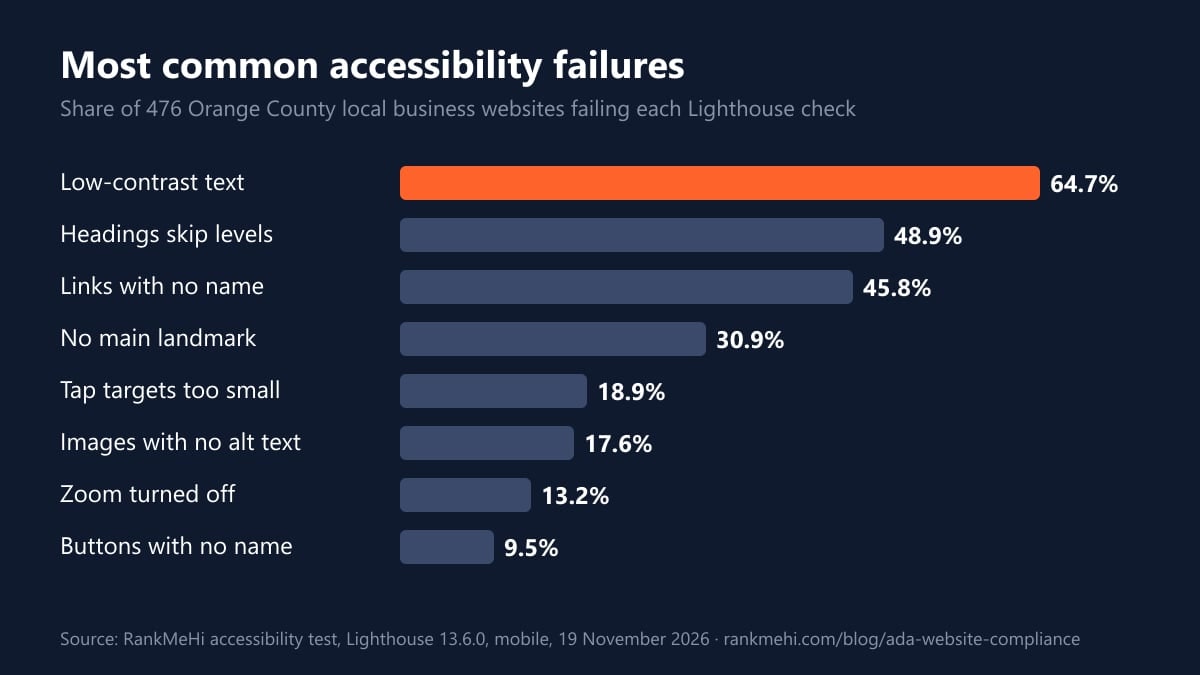
| Text without enough contrast | 1.4.3 | 308 of 476 | 64.7% |
| Headings skip levels | 1.3.1 | 233 of 476 | 48.9% |
| Links with no readable name | 2.4.4 | 218 of 476 | 45.8% |
| No main landmark | 1.3.1 | 147 of 476 | 30.9% |
| Embedded frames with no title | 4.1.2 | 90 of 476 | 18.9% |
| Tap targets too small or too close | 2.5.8 | 90 of 476 | 18.9% |
| Images with no alt text | 1.1.1 | 84 of 476 | 17.6% |
| Zoom turned off on phones | 1.4.4 | 63 of 476 | 13.2% |
| Buttons with no readable name | 4.1.2 | 45 of 476 | 9.5% |
| Links shown by color only | 1.4.1 | 41 of 476 | 8.6% |
Source: RankMeHi accessibility test of 476 Orange County local business sites, 19 November 2026. WCAG numbers are the closest success criterion.
The pattern is plain: the top failures come from design choices, not code. Pale grey text on white looks elegant in a mockup. On a phone in the sun, it's unreadable for anyone over 50, and a person with low vision can't read it at all.
What the top three failures look like
Three of these deserve a closer look:
- Contrast (64.7%). WCAG 1.4.3 asks for a 4.5:1 ratio for normal text. Grey on white, white on light photos and orange buttons with white text fail most often.
- Links and buttons with no name (45.8% and 9.5%). An icon-only phone button or a social icon with no label reads as "link" to a screen reader. The customer hears a list of blanks.
- Images with no alt text (17.6%). In our September crawl, 74.1% of live sites had at least one image with no alt attribute in the HTML. Lighthouse counts fewer because it ignores images it treats as decoration.
Check yours in five minutes: on your phone, turn on VoiceOver (iPhone) or TalkBack (Android) and swipe through your home page. If you hear "button" with no name, you've found a fix.
Use this chart on your site
Free to use under CC BY 4.0. Please credit RankMeHi with a link to this page. Copy the code:
Do accessibility overlays help? What 63 overlay sites scored
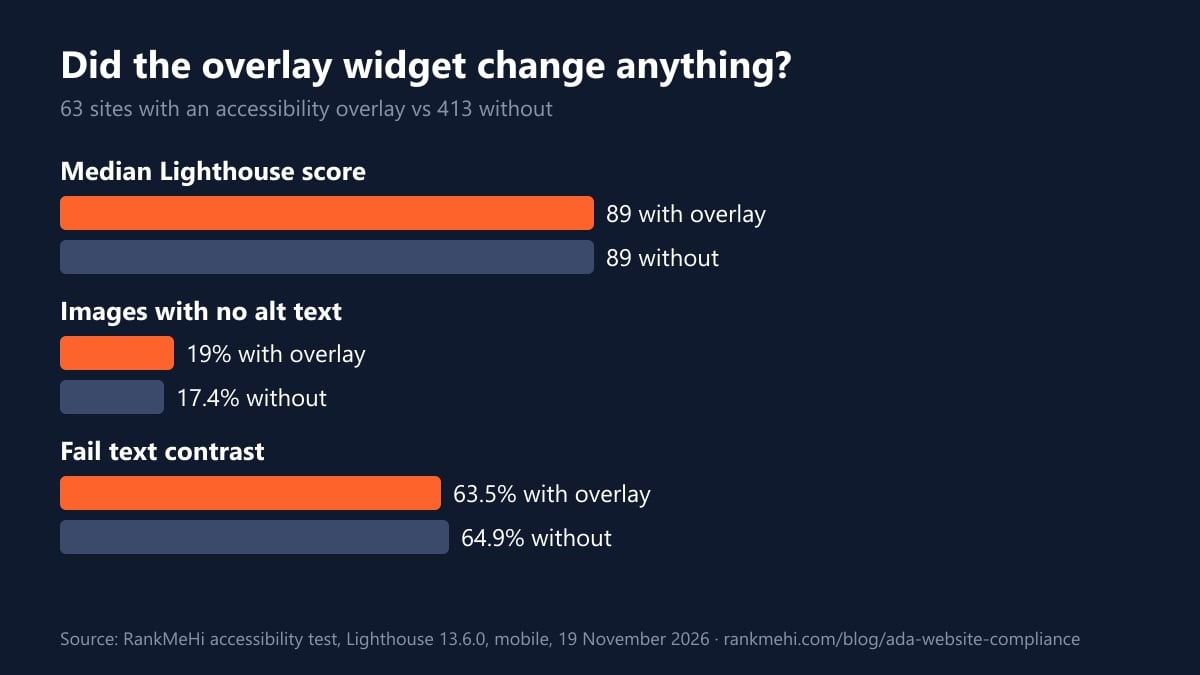
Short answer: no. In our sample, sites with an overlay widget scored a median 89, the same as sites without one (89), with no better contrast and no better alt text.
An accessibility overlay is the small round icon in the corner that promises "ADA compliance" for a monthly fee. Our crawl found one on 63 of 486 live sites (13%). We compared the overlay sites with the rest:
| Sites with an overlay | Sites without | |
|---|---|---|
| Sites scored | 63 | 413 |
| Median Lighthouse accessibility score | 89 | 89 |
| Scored 90 or more | 46% | 49.9% |
| Fail text contrast | 63.5% | 64.9% |
| Images with no alt text | 19% | 17.4% |
Source: RankMeHi accessibility test, 19 November 2026; overlay detected in our September 2026 crawl.
Use this chart on your site
Free to use under CC BY 4.0. Please credit RankMeHi with a link to this page. Copy the code:
The overlay group is small (63 sites), so don't over-read small gaps. The point is that there's no gain to see. In April 2025 the FTC approved a final order requiring accessiBe to pay $1 million and barred it from claiming its automated tool makes a site WCAG compliant without evidence.
Why don't they work? The widget runs after your page loads. It can enlarge text or flip colors for the person who finds the button. It can't write a true description of your before-and-after photo, and it can't tell a screen reader which of your five unlabeled buttons books the job.
A widget is a sign on the door, not a ramp
Short answer: an overlay tells visitors you care about access; the fixes inside your page are what give it to them.
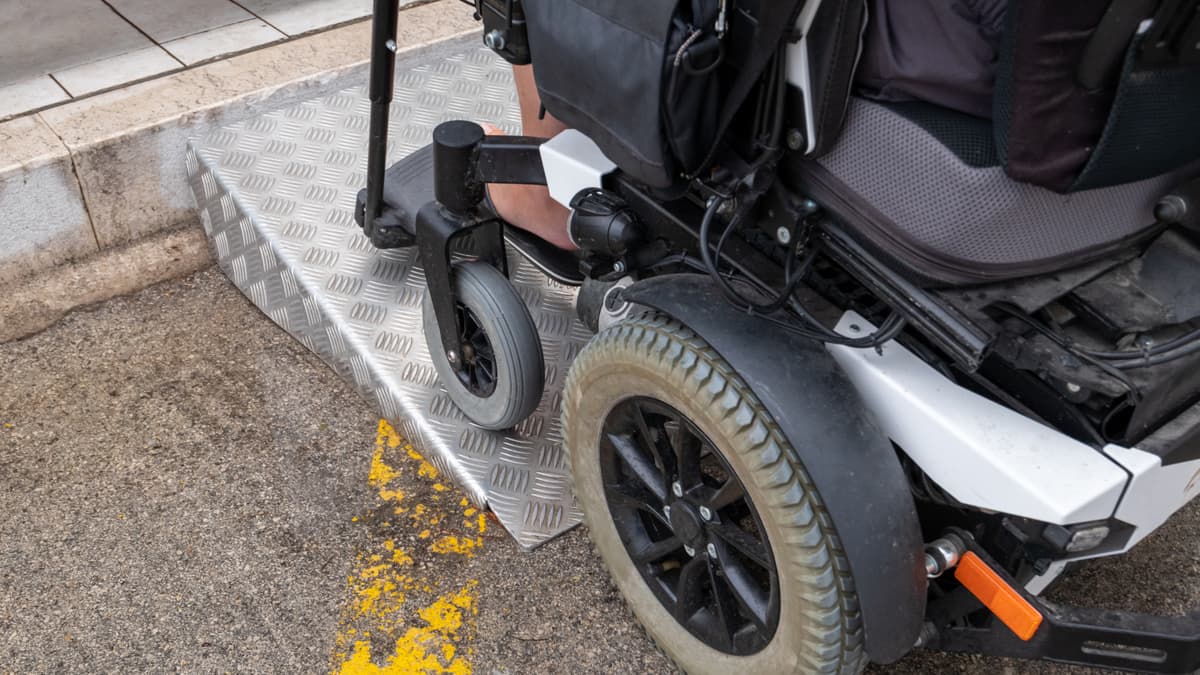
Think of your website as your storefront. An overlay is a sign on the door that says "accessible entrance." A ramp is the alt text, the contrast, the labeled form. A wheelchair user doesn't need the sign. They need the ramp.
The money follows the same logic. An overlay is a monthly fee that never ends. A contrast and labels fix is a one-time edit that stays fixed until someone redesigns the page. If you already pay for a widget, you don't have to remove it today. Just don't let it be the plan.
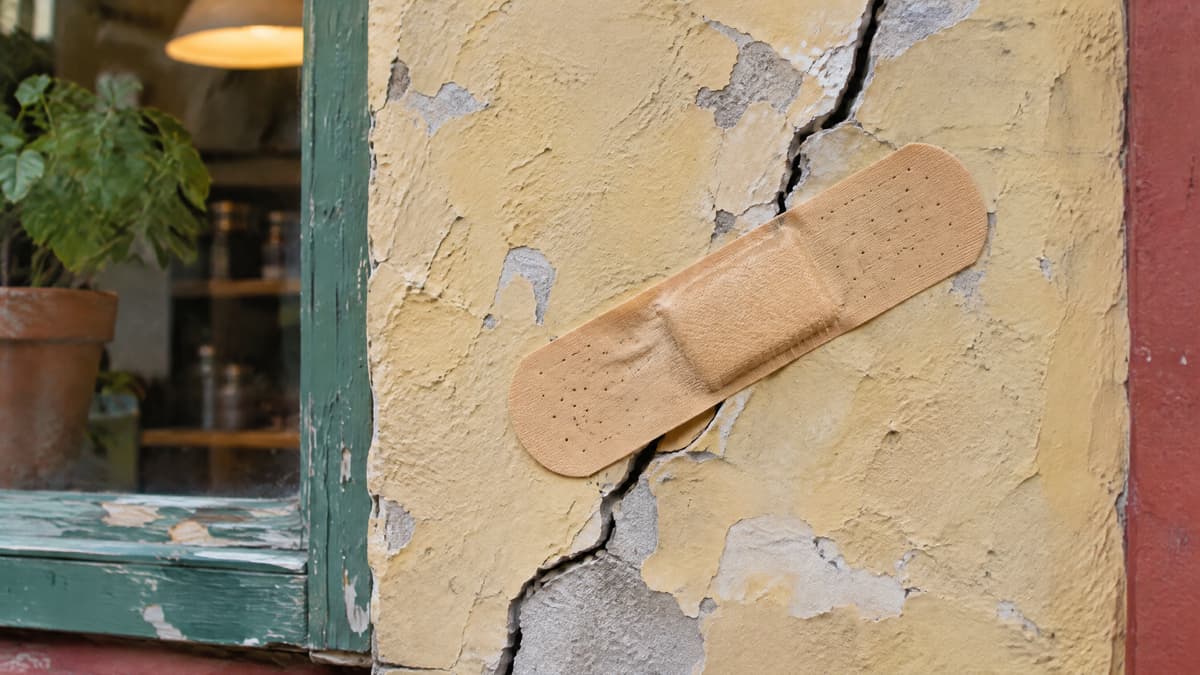
Check yours in five minutes: if your site has an overlay, turn it off in its settings for a minute and run Lighthouse again. If the score doesn't change, the widget isn't fixing what the test can see.
ADA website compliance by industry and platform
Short answer: no industry and no website builder in our sample is safe by default; the platform matters less than the choices made on it.
| Industry | Sites scored | Median score | Scored 90+ | Missing alt text |
|---|---|---|---|---|
| Health & dental | 155 | 89 | 45.8% | 16.1% |
| Beauty, fitness & personal | 103 | 91 | 57.3% | 15.5% |
| Legal, finance & real estate | 88 | 89 | 45.5% | 21.6% |
| Trades & home services | 77 | 88 | 44.2% | 19.5% |
| Auto | 47 | 90 | 59.6% | 19.1% |
Source: RankMeHi accessibility test, 19 November 2026. Industries with fewer than 8 scored sites are left out.
| Platform | Sites scored | Median score | Scored 90+ | Fail contrast |
|---|---|---|---|---|
| WordPress | 202 | 88 | 41.6% | 73.8% |
| Custom or unknown | 98 | 88.5 | 44.9% | 52% |
| Wix | 38 | 93.5 | 76.3% | 57.9% |
| Squarespace | 31 | 94 | 77.4% | 54.8% |
| GoDaddy Builder | 28 | 87.5 | 32.1% | 71.4% |
| Shopify | 16 | 90 | 56.3% | 68.8% |
| Weebly | 12 | 89.5 | 50% | 50% |
| Next.js | 11 | 93 | 72.7% | 54.5% |
| Duda | 10 | 94.5 | 80% | 60% |
| Webflow | 10 | 91.5 | 60% | 60% |
| Vertical builder | 8 | 88 | 37.5% | 87.5% |
Source: RankMeHi accessibility test, 19 November 2026. Platforms with fewer than 8 scored sites are left out.
Squarespace, Wix and Duda sites posted the highest median scores (94, 93.5 and 94.5), and WordPress the lowest of the large groups (88). WordPress sites failed contrast most often (73.8%), and GoDaddy builder sites had the most images with no alt text (46.4%). We tested each site as the owner runs it, with their theme, fonts and edits, not the builder's default template. The fix list looks the same everywhere: contrast, names, labels, alt text.
If you run a clinic or a law office, this matters twice. Your customers skew older, and older eyes are the first to struggle with low contrast. A fix for compliance is also a fix for the people most likely to book.
Why lawsuits make accessibility a business problem
Short answer: federal website accessibility suits rose 27% in 2025, so the cheapest time to fix contrast, names and labels is before a letter arrives.
The numbers are large and growing. Seyfarth Shaw's count of federal website accessibility suits reached 3,117 in 2025, 36% of all federal ADA Title III filings. That count covers federal courts only, so it understates the total filed.
We don't track who gets sued in Orange County, and we won't guess. What we can say is that the failures plaintiffs' experts list first, contrast, alt text and unlabeled forms, are the same ones that top our table. They're also the cheapest to fix.
"The cheapest accessibility fix is the one you make before the letter arrives, not after."
Not sure which of your failures matter most? Send us your URL. We'll run the test, read the results and tell you which fixes come first. Get a free website check
What to fix first: a 7-step order
Short answer: fix what blocks a customer from contacting you, then what blocks reading, then structure, and test with a real screen reader at the end.
The seven steps, in order
- Name every button and link on your call, book and quote paths. *Out of order:* new colors don't help a blind customer who can't find "Book."
- Label every form field with a visible label, not only placeholder text. *Out of order:* placeholders vanish while typing.
- Fix text contrast to at least 4.5:1 for normal text, 3:1 for large text. *Out of order:* new brand colors undo it, so lock the palette first.
- Write alt text for every image that carries meaning; mark decoration as decorative. *Out of order:* alt text on a slider keyboards can't reach is wasted.
- Turn zoom back on (remove `user-scalable=no` and `maximum-scale=1` from the viewport tag) and set the page language. *Out of order:* nothing breaks; both take two minutes.
- Fix heading order so each page has one H1 and steps down without skipping. *Out of order:* it changes visual sizes, so do it after design edits.
- Test with a keyboard and a screen reader on your booking or contact path. *Out of order:* testing first buries you in findings; testing last confirms the fix.
Skip the order and you pay twice: a new theme next quarter undoes the contrast fix, and a new form undoes the labels. ### Why the order matters, and what it costs
Steps 1 to 5 take a developer less time than most owners spend reading their overlay invoice.
For the broader picture of what a site needs to turn visits into calls, our lead-ready website checklist covers forms, tap-to-call and speed alongside accessibility. Speed and accessibility often share a fix, too: our Core Web Vitals guide shows how heavy sliders and pop-ups hurt both.
When you need a specialist and a lawyer, not a web agency
Short answer: if you already have a demand letter, call a lawyer first, then an accessibility auditor who tests with disabled people.
We fix websites. We run Lighthouse, fix contrast, names, labels and alt text, and check keyboard paths. That covers the failures in this study. It doesn't cover:
- A formal WCAG audit with manual testing by people who use assistive technology every day.
- A legal opinion on a demand letter or a lawsuit.
- Documents like PDFs and menus, which need their own remediation.
If any of those are your situation, hire for them. A web agency is the wrong first call when a court date is set.
What RankMeHi does about ADA website compliance
Short answer: a free check first, then a fixed-price fix if you want one.
We ran the same test on our own site on 19 November 2026, before publishing. Our home page scored 94, our contact page 96 and our study page 91. All three fail text contrast, and the study page has buttons with no name. Those are the first two steps on the list above, and we're fixing them in that order. We'd rather show you the number than claim a perfect score.
When we design a website or build one, labeled forms, named buttons, checked contrast and real alt text are part of the job, not an add-on. For an existing site, we start with the same free website check: this Lighthouse accessibility test, plus speed, forms and tap-to-call, with a short list of what to fix first.
If you want us to do the fixes, our audit and fix work starts from $490 and takes one to two weeks. You see the price before anything starts. If your site already passes and only needs a person to test the booking path, we'll say so.
Key takeaways
- RankMeHi's Lighthouse test of 476 Orange County local business sites found a median accessibility score of 89; only 8.2% scored 100.
- Low text contrast was the most common failure, on 64.7% of sites.
- Overlay sites scored the same median (89) as sites without one (89); a widget is a sign on the door, not a ramp.
- ADA website compliance for private businesses has no certificate; WCAG 2.1 or 2.2 AA is the yardstick.
- The first fixes are names, labels, contrast and alt text: edits, not a rebuild.
FAQ
Is my small business website required to be ADA compliant?
A business open to the public is covered by Title III of the ADA, and the Department of Justice says its websites should be accessible. There is no written federal web rule for private businesses, so courts usually measure a site against WCAG 2.1 or 2.2 level AA. Treat AA as the standard to meet.
Does an accessibility overlay make my website ADA compliant?
No. In our test of 476 local business sites, sites with an overlay widget scored a median 89, the same as the 89 of sites without one. The FTC's 2025 order against accessiBe bars it from claiming its tool makes a site WCAG compliant without evidence. Fix the page itself.
How do I check my website for ADA compliance for free?
Run Lighthouse in Chrome: press F12, open the Lighthouse tab, choose Accessibility and Mobile, and run it. Then swipe through your home page with VoiceOver or TalkBack. Lighthouse finds missing names, labels, contrast and alt text; the screen reader shows what a blind customer actually hears.
What is a good Lighthouse accessibility score?
Aim for 100 on the pages that take calls and bookings. In our sample, 49.4% of local sites scored 90 or more, yet most still failed at least one check that blocks real people. A 100 means the automated checks pass, not that the site is fully WCAG compliant.
How much does it cost to make a website ADA compliant?
For most local sites, the common failures are edits: contrast, alt text, labels and button names. RankMeHi's audit and fix work starts from $490. A formal WCAG audit with manual testing by people who use assistive technology costs more and is worth it if you already have a demand letter.
What WCAG level do I need for ADA website compliance?
Level AA. The Department of Justice's Title II rule for state and local governments names WCAG 2.1 AA, and most settlements for private businesses use 2.1 or 2.2 AA. Level A is too low to rely on, and AAA is not expected for a whole site.
Cite this study
RankMeHi, "ADA Website Compliance in 2026: We Tested 476 Local Business Sites," November 2026. Lighthouse 13.6.0 accessibility category, mobile, via PageSpeed Insights API, 19 November 2026; sample from the RankMeHi 662-site Orange County local business website study. More numbers from the same sites: local business website statistics. You may use the charts with a link to this page.
Find out where your site stands. We'll run the accessibility test, check your forms, speed and tap-to-call, and send the fixes in order. Get a free website check
Services mentioned in this article
RankMeHi designs and builds business websites, then makes sure they are found and convert. Start with the two pages below.
Keep reading

We Tested 662 Local Business Websites in Orange County. Here's What Actually Works
Local business website study 2026: we tested 662 Orange County sites. 15% don't load, 26% lack tap-to-call and only 7% pass Google's mobile speed test.
Read article
Can Someone Email as Your Business? Our Email Spoofing Study of 466 Local Firms
Email spoofing study: we checked the DNS of 466 local businesses on 4 Nov 2026. 83.5% can't stop a fake email in their name. Check yours in five minutes.
Read article
Core Web Vitals Explained: What Google's Speed Scores Mean for Your Business (and How to Fix Them)
Core Web Vitals explained for business owners: what LCP, INP and CLS mean, the scores Google wants, how to test your site, and the fixes that matter most.
Read article
Web Design for Small Business: What Actually Brings In Calls
Web design for small business in 2026: the pages, features and proof that turn visitors into calls, real examples by industry, and honest costs.
Read article