A Costa Mesa plumber paid his cousin's roommate $600 for a website two years ago. It has his logo, a stock photo of a wrench, and a contact form that emails an inbox nobody checks anymore. It has never brought in a single call.
That's what happens with most web design for small business: built to look finished, not to make the phone ring. The pages that convert look different from a generic template, and they change again by industry, whether you fix HVAC systems, pull teeth or sell handmade furniture.
This guide covers what a small business website actually needs to bring in calls, with real examples by industry and honest 2026 costs.

Quick answer: A small business website needs fast mobile load, clear service pages, one obvious way to call or request a quote on every page, and local proof: reviews, a service area and real photos. Templates and DIY builders can work. The pages and the proof matter more than the platform.
Not sure if your current site is doing its job? We'll check your speed, mobile experience and calls-to-action and tell you exactly what's costing you leads, free. Book a free website and SEO audit.
What web design for small business actually needs
Every small business website that pays for itself does five things, no matter what you sell. Skip one and the site looks fine but doesn't convert.

| What every site needs | Why it matters | Common mistake |
|---|---|---|
| Loads in under 3 seconds on a phone | More than half of mobile visits leave after a 3-second wait, per Google's mobile load-time research | A homepage built on a slow theme with unoptimized photos |
| One clear next step per page | A visitor given three options usually takes none | A menu with 14 items and three different phone numbers |
| A phone number and quote form on every page | Most searches happen because someone has a problem right now | The number only lives in a tiny footer |
| Real photos of the business and service area | People hire someone who looks like they'll actually show up | Stock photos of people who don't work there |
| Structured data for the business, services and FAQs | Helps Google's map pack and AI answers describe the business correctly | No schema at all, which is most templates out of the box |
The plumber's $600 site got two of these right and three wrong. That's a fixable problem, and it's usually less about redesigning everything and more about rebuilding the handful of pages that do the selling. Good web design services build every page around that one job: getting the visitor to call.
Web design examples by industry: what changes, what doesn't
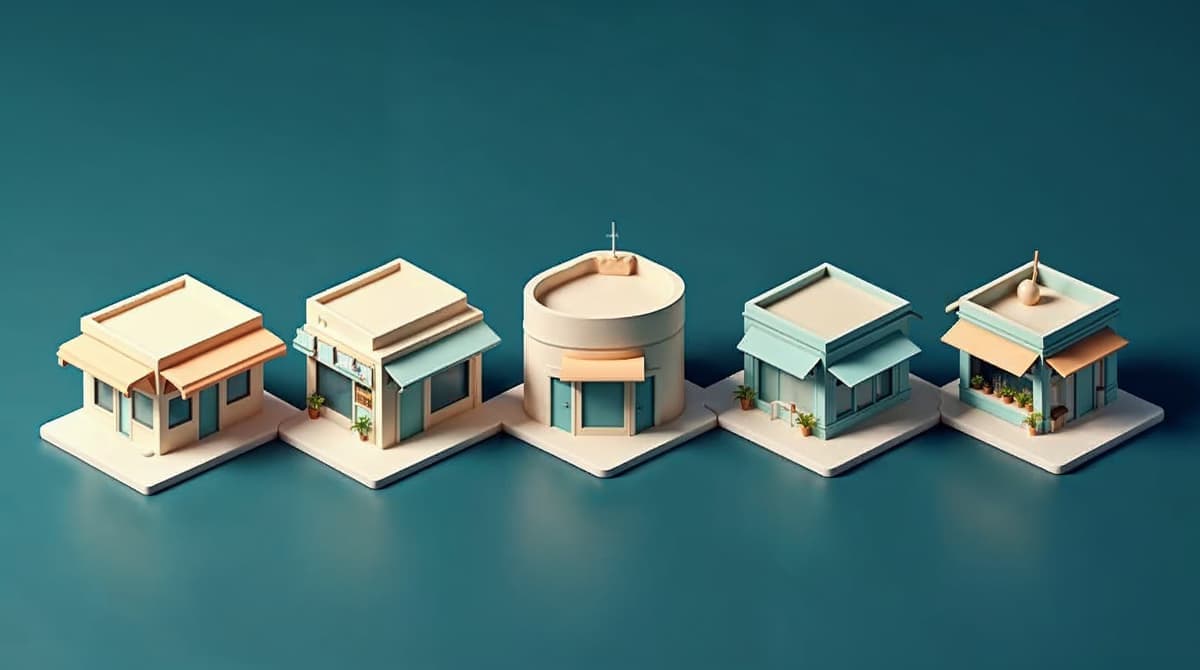
The fundamentals above hold everywhere. What changes by industry is which page carries the weight and what proof a visitor needs before they'll actually pick up the phone.
| Industry | Page that does the selling | What actually gets the call |
|---|---|---|
| HVAC, plumbing, electrical | Emergency service page with a click-to-call button above the fold | Same-day availability, a license number, a real technician's face |
| Dental and medical practices | New patient page with insurance and financing details | Real reviews, online booking, before-and-after photos with consent |
| Restaurants and cafes | Menu and hours page that loads instantly on a phone | Recent photos of actual dishes, not a stock burger, and a working reservation or order link |
| Home services and contractors | A project gallery organized by job type | Photos of past jobs in the visitor's neighborhood, license and insurance shown plainly |
| Retail and boutique shops | Category pages with clear pricing and shipping | Fast checkout, real product photos, an honest return policy |
| Legal and professional services | A practice-area page for each type of case | A short bio with a real photo and a way to book a consult without calling first |
Notice what doesn't change. Every one of these still needs a fast load, one clear next step and proof the business is real. The difference is what "proof" looks like when you're choosing an emergency plumber versus choosing a lawyer.
Small business web design cost: DIY, freelancer or custom
Once you know what the site needs to do, the next question is what it should cost to get there. We cover the full line-item breakdown in how much does it cost to build a website; here's the short version for a small business specifically.
| Option | Typical cost | Best for | Watch out for |
|---|---|---|---|
| DIY builder (Wix, Squarespace, GoDaddy) | $0 to $300 upfront, $17 to $60 a month, per Wix's own plans | Testing an idea on a tight budget | Slow themes, thin SEO controls, a painful migration later |
| Template + freelancer | $500 to $3,000 one-time | A simple site with a handful of pages | Wide range in quality; ask to see three live sites they built |
| Custom small business site (5 to 10 pages) | $2,500 to $8,000 one-time, in line with WebFX's 2026 cost guide | A service business that needs to rank and convert | Scope creep; get the page count and inclusions in writing |
| Ecommerce or multi-location build | $8,000 and up | A store or a business with several locations | Ongoing hosting, plugin and update costs add up |
A DIY builder is not a bad choice for a one-person business still testing the idea. It becomes the wrong choice once the site needs to rank locally, load fast on every device and update itself with new service pages, which is where most small businesses land within the first year or two.
"A website is not a brochure. It's the employee that works nights, weekends and holidays and never calls in sick. Build it like you'd hire for that job."
DIY builder or hire a designer? What's actually right for a small business
This is the question under the question: can you build this yourself and skip the cost.
Some of it, yes. Some of it needs someone who does this for a living.

| Do it yourself | Hire it out |
|---|---|
| Write the first draft of your service descriptions in your own words | Structure the site so Google and AI answers can find each service and location |
| Gather real photos of your team, shop and finished jobs | Speed and Core Web Vitals fixes that a drag-and-drop builder can't reach |
| Ask happy customers for reviews and post them yourself | Conversion-focused layout: what goes above the fold, what the button says |
| Keep your name, address and phone identical everywhere online | A quote form and click-to-call setup that actually routes to the right person |
If your current site is costing you leads and you're not sure why, our guide on why your website isn't bringing you leads walks through the most common culprits before you spend a dollar on a rebuild.
Already have a site and not sure if it needs a rebuild or a smaller fix? Send us the link. We'll tell you honestly which one it needs, free. Get a free website and SEO audit.
Before you approve a small business website design: an 8-point checklist
Whether you're reviewing a freelancer's draft or your own DIY build, run through these eight questions before you launch.

- Does the homepage say what you do and where, in one sentence? A visitor should never have to scroll to find out.
- Is a phone number or quote form visible without scrolling, on every page? Not just the homepage or the contact page.
- Does it load in under 3 seconds on a phone? Test it free on PageSpeed Insights.
- Are the photos real, not stock? Real photos of your team, shop and past jobs build more trust than any headline.
- Does every service or product have its own page? One page trying to cover everything ranks for nothing.
- Is there at least one real review or case study visible on the homepage? Proof belongs above the fold, not buried.
- Can you update the text and photos yourself? If every small change needs a developer, that's a hidden ongoing cost.
- Does the site have schema for your business type? It's what lets Google and AI answers describe you correctly instead of guessing.
Mobile, speed and local search: the non-negotiables
Two things sink more small business websites than a bad design ever does: a slow mobile experience and no local signal.
Google has said plainly that mobile-friendliness affects how a site is crawled and ranked, and most local searches now happen on a phone in the parking lot or the job site. A beautiful desktop mockup that loads slowly on mobile loses to a plainer site that's fast.
Local signal matters just as much. A local SEO foundation, meaning a complete Google Business Profile, consistent name and address details, and a service-area page for each city or neighborhood you cover, does more for a small business than another homepage redesign. Design and local search aren't separate projects. A site built without them baked in usually needs a second round of work within a year.
The same goes for turning the visitors you already get into calls. A conversion rate optimization agency looks at where people drop off, whereas a designer alone may only make the site look better without changing what happens when someone lands on it. Both matter, and the best small business sites are built with both in mind from the start.
What RankMeHi offers for small business web design
Here's what we actually charge, so you can compare it against any quote you get.
- New website, from $2,490. Five pages, design included, built around the pages that sell in your industry, not a generic template. Launches with analytics and Search Console already connected.
- Audit and fix, from $490. For a site that's close but not converting. We find what's costing you leads and fix the technical and on-page problems.
- Ongoing growth, from $690 a month. New service and location pages, local SEO work and monthly reporting once the site is live. Six-month minimum, then month to month.
- AI readiness sprint, from $390. The schema and content work that gets your business named correctly in ChatGPT, Gemini and Google's AI answers.
Full pricing is on our pricing page, and you can see the work in our case studies. We build for businesses across Orange County, from Costa Mesa to Irvine and Anaheim, and remotely across the US.
When you don't need us: if you're a one-person business still testing whether this idea has legs, a $20-a-month builder site with your own photos and honest copy will do the job for now. Come back when the phone starts ringing enough that a slow site starts costing you real money.
Key takeaways
- A small business website needs speed, one clear next step per page, real proof and structured data, no matter the industry.
- What "proof" looks like changes by industry: license and same-day service for a plumber, reviews and booking for a dentist, fresh photos for a restaurant.
- DIY builders work for testing an idea. Custom sites earn their cost once you need to rank locally and convert more of the traffic you get.
- Handle speed, mobile and local SEO at the same time as design, not as a separate project a year later.
- Get quotes with a page count and inclusions in writing, and confirm you can update the site yourself before you sign.
FAQ
How much does web design cost for a small business?
Most small businesses spend $500 to $3,000 for a template built by a freelancer, or $2,500 to $8,000 for a custom 5 to 10 page site built to rank and convert. DIY builders run $17 to $60 a month. The right choice depends on whether the site just needs to exist or needs to actively bring in calls.
What does a small business website need to rank on Google?
It needs to load fast on mobile, have a dedicated page for each service and location, use schema so Google understands what the business does, and show real signals like reviews and a complete Google Business Profile. Design alone doesn't rank a site; the technical and local foundation underneath it does.
Should I use a website builder like Wix or Squarespace for my small business?
A builder is a reasonable start for a one-person business on a tight budget. It becomes limiting once you need faster load times, more control over SEO, or several service and location pages that a template wasn't built to organize well.
How many pages does a small business website need?
Most service businesses need 5 to 10: home, about, a page per core service, a contact or quote page, and a page per city or neighborhood served. Trying to cover every service on one page usually means the page ranks for none of them.
Do I need a whole new website or just a redesign?
If the site is under about three years old and mostly works but converts poorly, a redesign or targeted fix is usually enough; see our small business website redesign guide for the signs. If it's older, slow everywhere, or was never built for mobile, a new build is usually the faster path.
The short version
Web design for small business isn't about picking a pretty template. It's about building the handful of pages that do the selling for your specific industry, making sure they load fast and show up locally, and giving visitors real proof before they ever pick up the phone.
Ready to see what your site should look like? We'll show you exactly what's working, what's costing you leads, and what we'd build differently, free. Request your free website and SEO audit.
Services mentioned in this article
RankMeHi designs and builds business websites, then makes sure they are found and convert. Start with the two pages below.
Keep reading

Small Business Website Redesign: 12 Signs Your Site Is Costing You Leads
Your website may not look terrible. It may have your logo, a list of services, a contact page, and a few professional photos. It may even receive some traffic from Google, social media, referrals, or paid ads. But that does not necessarily mean it is helping your business grow. A website can quietly lose potential …
Read article
How Much Does It Cost to Build a Website? Real 2026 Prices, Line by Line
How much does it cost to build a website in 2026? Real price ranges for DIY, freelancer and agency builds, monthly costs, and the hidden costs to plan for.
Read article
Why Your Website Isn't Bringing You Leads — and What to Fix First
A website that doesn’t generate leads often has three major problems: poor design that reduces trust, low search visibility that limits traffic, and unclear calls-to-action that fail to convert visitors. Fixing these in order — starting with design, then SEO, then conversion elements — improves results faster than tackling them randomly. You built the website. …
Read article
Web Design Agency vs “Just a Website”: How to Actually Get More Leads from Your Site
If you’re like most local business owners, you don’t wake up thinking about “CSS” or “Core Web Vitals”. You just know this: “We’re not getting enough leads from our website… and I’m not sure why.” Maybe you already paid someone to “build a website” once. It looks okay, but the phone isn’t ringing more. Your …
Read article